
Day 1 – Sunday 28 Aug 2011
The airport, Beja
 It’s ironic that the country to which we owe so much for the discovery of the world has so much of its own still undiscovered. For two centuries, Portuguese explorers headed out into the vast unknown, and with mind-blowing courage and resilience found, explored and mapped Africa, Asia and South America, reaching as far as Japan and the Cape of Good Hope. It’s even more ironic that the most famous of these, Vasco da Gama, was born in a small town in Alentejo. Because visiting Alentejo is like stepping into a place that time forgot; an oasis of ancient rhythms and beauty hemmed in by the tourist-saturated coastline of Algarve and the sophisticated modernity of Lisboa. It’s easy, at first, to see why people don’t venture too far beyond the boundaries of these regions which are just foreign and sunny enough to feel like a holiday, but come complete with the comfortingly familiar: the golden arches of McDonalds, smart modern holiday apartments, nightclubs and long sandy beaches.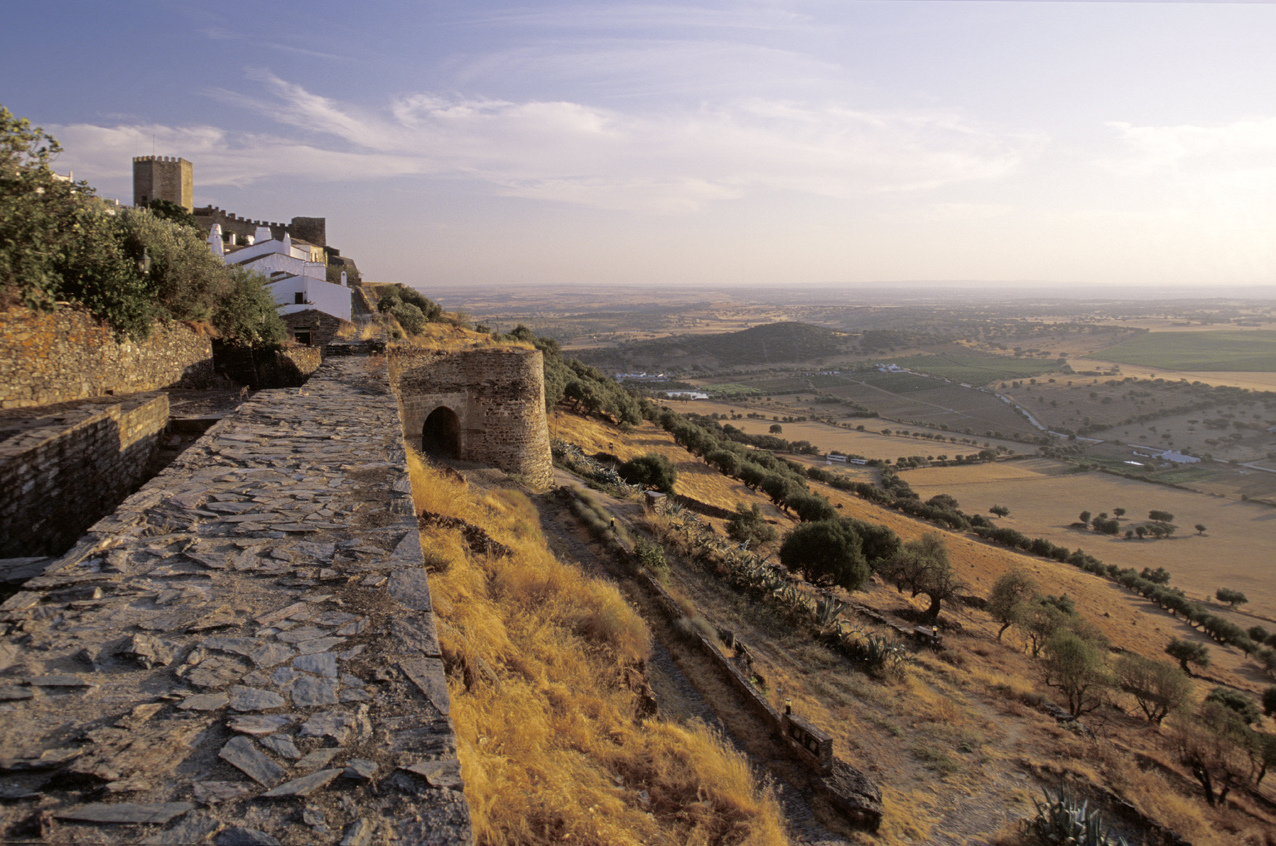
It’s not as hot as you think. OK, we went in September and talk of the town was how mild the weather was. But the evenings were cool, even chilly, and on one day we were brought to an absolute halt for most of the day by unseasonal, but nevertheless torrential, rain. The insider information tells us that: April is breathtakingly beautiful – the wild flowers come out and the whole of Alentejo is practically pulsating with colour and scent; May and June are fresh and still green and the tourists haven’t arrived yet; July is hot, it’s the time for swimming pools and siestas and the season for acres upon acres of sunflowers; August is hotter and the Lisbonites arrive in their droves from the city; September is harvest, busy, hot and maybe wet, but the grapes and ripe and the fruit everywhere is juicy and sweet and falling off the trees; October is cool and quiet but the days are still sunny; November to March is cold (by Alentejo standards – I saw photos of the Soares kids swimming in the river in January, wearing nothing but costumes!) but the tourists have gone, the guest houses all have roaring log fires, the days are bright and beautiful for long walks across the estates, the wines are rich and throat-warming, the food is generous and hearty. You could read that book you’ve been meaning to read for years…
That Lisbon joke about Alentejana backwardness? I think they’re scared of competition. When we saw the extent of the visionary thinking in Alentejo, we were astounded. The incredible engineering feat of the Alqueva dam and the revolutionary changes it has brought to the area, the strict but incredibly wise rules about building and development and preserving the environment, the canny and thrifty yet glorious cuisine, a good yet simple roadwork system, the huge untouched tracts of cork forests and wilderness, the introduction of vineyards , the preservation of the marble heritage, the beauty of the architecture that stands from Roman to very modern, the restoration and recycling of abandoned buildings, and the fierce independence of the people: these are not the signs of a dull and slothful place. Alentejo was so full of life it thrilled to the touch. But you’ve got to travel to find it out. Perhaps the only time I felt exasperated was when it came to connecting with the outside world. Wireless, nearly everywhere, was appalling: slow, intermittent and/or hideously expensive. The only place I could finally, with a sigh of relief, send and receive data was at the Convento do Espinheiro in Évora.
Finally, poejo. Pennyroyal. An odd-tasting mint that goes into lots of dishes and gets made into a strangely medicinal digestif liqueur. My husband will tell you that it’s as bad as everyone says it is. I say, going native, it’s fantastic.
Tamlyn Currin


